
"92600 tons"
9572 article(s) found

Ethiopian Coffee Flavor with acidity and texture introduction to the characteristics of Fine Coffee beans in Manor area
Ethiopian people are addicted to coffee. In 2003, domestic consumption accounted for 42.3% of the total output, with a per capita consumption of 3 kg. But more than half of the coffee produced each year is used for export to earn foreign exchange. The main exporters include the United States, Italy, the United Kingdom, Sweden, Norway, Greece, France, Belgium, Germany and Australia. Before 1974, the right to produce, process and trade coffee was controlled by

The relationship between Kenyan coffee and Arabica coffee beans
In Ethiopia, the grading and quality control system of coffee is divided into three levels: producer, regional and national. All coffee is inspected by local inspection agencies before leaving the country of origin, and then re-tested at the coffee inspection and grading centers in Addis and Diredawa to determine its quality grade. Coffee is graded before auction and sale, for all involved in production, acquisition,

Introduction to the Flavor characteristics of Ethiopian Yega Xuefei Coffee
In Ethiopia, the grading and quality control system of coffee is divided into three levels: producer, regional and national. All coffee is inspected by local inspection agencies before leaving the country of origin, and then re-tested at the coffee inspection and grading centers in Addis and Diredawa to determine its quality grade. Coffee is graded before auction and sale, for all involved in production, acquisition,

An introduction to the characteristics of Ethiopian Coffee Flavor Manor
In Ethiopia, the grading and quality control system of coffee is divided into three levels: producer, regional and national. All coffee is inspected by local inspection agencies before leaving the country of origin, and then re-tested at the coffee inspection and grading centers in Addis and Diredawa to determine its quality grade. Coffee is graded before auction and sale, for all involved in production, acquisition,

Introduction to the grading of Ethiopian Coffee
Sun-cured coffee accounts for 65% of exports. Mainly picked by families, red coffee beans are placed on cement floors or on high tables to dry to about 11.5% humidity, then peeled and cleaned. Coffee grading and quality control system in Ethiopia, coffee grading and quality control system is divided into three levels: producer, regional and national. All coffee is required before leaving the country of origin.

Yunnan Coffee suffers from the embarrassment of increasing production without increasing income
It is the 2015-2016 harvest season in Yunnan, and according to the Yunnan Coffee Industry Association, Yunnan coffee production will reach about 130000 tons this year. Due to the recent decline in futures prices in New York, Yunnan coffee will once again experience an increase in production if it continues to follow the previous acquisition practice of subtracting 1020 cents from the New York futures price.
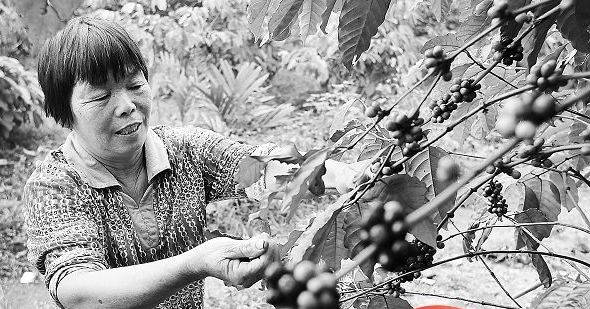
Coffee cold knowledge: Hainan coffee annual output of less than 200 tons, sales reached 6000 tons
Growers at Xinglong Overseas Chinese Farm are checking coffee growth. Reporter Su Xiaojie Photographed by our reporter Kuang Changxun Guo Jiaxuan Special reporter Chen Xunjing Correspondent Wang Zhezhi Fu Ji like a mountain, prosperous prosperity. In the past May Day holiday, Wanning Xing

A brief introduction to the history and culture of the origin and development of Angolan boutique coffee beans that are almost impossible to buy.
Angola was once one of the largest coffee producers in the world, with coffee production reaching a record 225000 tons in 1974. However, as a result of the 27-year civil war that broke out after independence in 1975, Angolan coffee production fell sharply, Angola's ambassador to the United States, Agostinho Tavares, told Angolan daily newspaper Jornal de Angola on Monday in New York that the first batch of Angolan coffee exported to the United States (a total of 11 tons) had arrived in the country.

What are the world-famous Ethiopian coffee? what coffee does Ethiopia have?
The world-famous Ethiopian coffee is mainly as follows: 1. Limu coffee grows between 1400 meters and 2000 meters above sea level. Wash the coffee. Excellent quality, with strong nut aromas, suitable acidity, with the intensity of wine. The annual output is 29000 tons. 2. Jima Coffee grows between 1400 and 1800 meters above sea level. Sun-baked coffee. Slightly sour, with nutty aromas and a long finish. Annual output

Introduction of Ethiopian Coffee Bean varieties in Ethiopian Coffee Flavor Manor
In Ethiopia, the grading and quality control system of coffee is divided into three levels: producer, regional and national. All coffee is inspected by local inspection agencies before leaving the country of origin, and then re-tested at the coffee inspection and grading centers in Addis and Diredawa to determine its quality grade. Coffee is graded before auction and sale, for all involved in production, acquisition,

Yunnan Coffee suffers from the embarrassment of increasing production without increasing income
It is the 2015-2016 harvest season in Yunnan, and according to the Yunnan Coffee Industry Association, Yunnan coffee production will reach about 130000 tons this year. As the futures price in New York has continued to decline recently, if we continue to follow the previous purchase price minus 1020 cents from the New York futures price, Yunnan coffee will once again suffer from increasing production but not increasing income.

Ethiopian Coffee Bean grading Standard-explanation of Ethiopian Coffee Bean Export auction process
Professional coffee knowledge exchange more coffee bean information Please follow the coffee workshop (Wechat official account cafe_style) the evaluation criteria of Ethiopian coffee beans were formulated with the assistance of the American Fine Coffee Association (SCAA) (why can't Ethiopia, as the home country of coffee, be independent? Yeah! Think about it)-Egypt fully implemented the central auction system in 2008.

The long aftertaste of Ethiopian coffee introduces the characteristics of Ethiopian coffee.
In Ethiopia, the grading and quality control system of coffee is divided into three levels: producer, regional and national. All coffee is inspected by local inspection agencies before leaving the country of origin, and then re-tested at the coffee inspection and grading centers in Addis and Diredawa to determine its quality grade. Coffee is graded before auction and sale, for all involved in production, acquisition,

Hougu Coffee spends 70 million yuan to buy 100 mu of land and attaches importance to the European market.
In addition, because the Kunming Coffee Trading Center has been difficult to get government approval, Gu Coffee changed its position after June this year, and took the lead in establishing a coffee trading center in Chongqing and officially opened for business. High-profile announced to build China's largest coffee electronic trading platform, coffee (cross-border) e-commerce platform, coffee industry chain financing platform, as well as China Coffee Exchange settlement Center and Coffee big data

Full-bodied fragrant Indonesian Mantenin boutique coffee bean flavor and taste introduction to the planting environment
According to the statistics of Indonesia's Ministry of Energy and Mines (2013), Indonesia has coal reserves of about 58 billion tons, of which 19.3 billion tons have been proven, of which 5.4 billion tons are commercially recoverable reserves. As there are still many areas with unproven reserves, the Indonesian government estimates that the total coal reserves will reach more than 90 billion tons. Indonesia has huge natural gas reserves, about 123,589 trillion cubic meters.
The "unsalable disturbance" of coffee beans gradually subsided.
Huang Lishang Zhang Yan in the past two weeks there are basically no first-class beans on the market. Li Xingrong, head of the coffee department of Yunnan's leading coffee company Aiyi Group, told me that this means that the unsalable wave of coffee beans in April has gradually subsided. Li Xingrong believes that the unsalable storm that exploded in April is just an illusion. Arabica coffee futures rose all the way last year, and in the same year,

Introduction to the planting environment of Manor Manor with strong spice flavor and Indonesian Manning coffee flavor
According to the statistics of Indonesia's Ministry of Energy and Mines (2013), Indonesia has coal reserves of about 58 billion tons, of which 19.3 billion tons have been proven, of which 5.4 billion tons are commercially recoverable reserves. As there are still many areas with unproven reserves, the Indonesian government estimates that the total coal reserves will reach more than 90 billion tons. Indonesia has huge natural gas reserves, about 123,589 trillion cubic meters.
November Robusta coffee futures climbed 21 U.S. dollars, or 1 percent, to close at 2048 U.S. dollars per ton.
Gold investment futures on August 28th, London International Financial Futures Exchange (LIFFE)-November Robusta coffee futures climbed 21 US dollars, or 1%, to close at 2048 US dollars per ton. Arabica coffee futures rose above $2 on Wednesday, extending the previous day's rally on concerns about production in Brazil, the largest producer of coffee beans. Cocoa futures fell after rising sharply in the first minute of trading, hitting

Introduction to the characteristics of Fine Coffee beans with strong Flavor Flavor in Indonesia
According to the statistics of Indonesia's Ministry of Energy and Mines (2013), Indonesia has coal reserves of about 58 billion tons, of which 19.3 billion tons have been proven, of which 5.4 billion tons are commercially recoverable reserves. As there are still many areas with unproven reserves, the Indonesian government estimates that the total coal reserves will reach more than 90 billion tons. Indonesia has huge natural gas reserves, about 123,589 trillion cubic meters.

Introduction to the characteristics of Ethiopian boutique coffee bean flavor and taste manor with suitable acidity
In Ethiopia, the grading and quality control system of coffee is divided into three levels: producer, regional and national. All coffee is inspected by local inspection agencies before leaving the country of origin, and then re-tested at the coffee inspection and grading centers in Addis and Diredawa to determine its quality grade. Coffee is graded before auction and sale, for all involved in production, acquisition,